
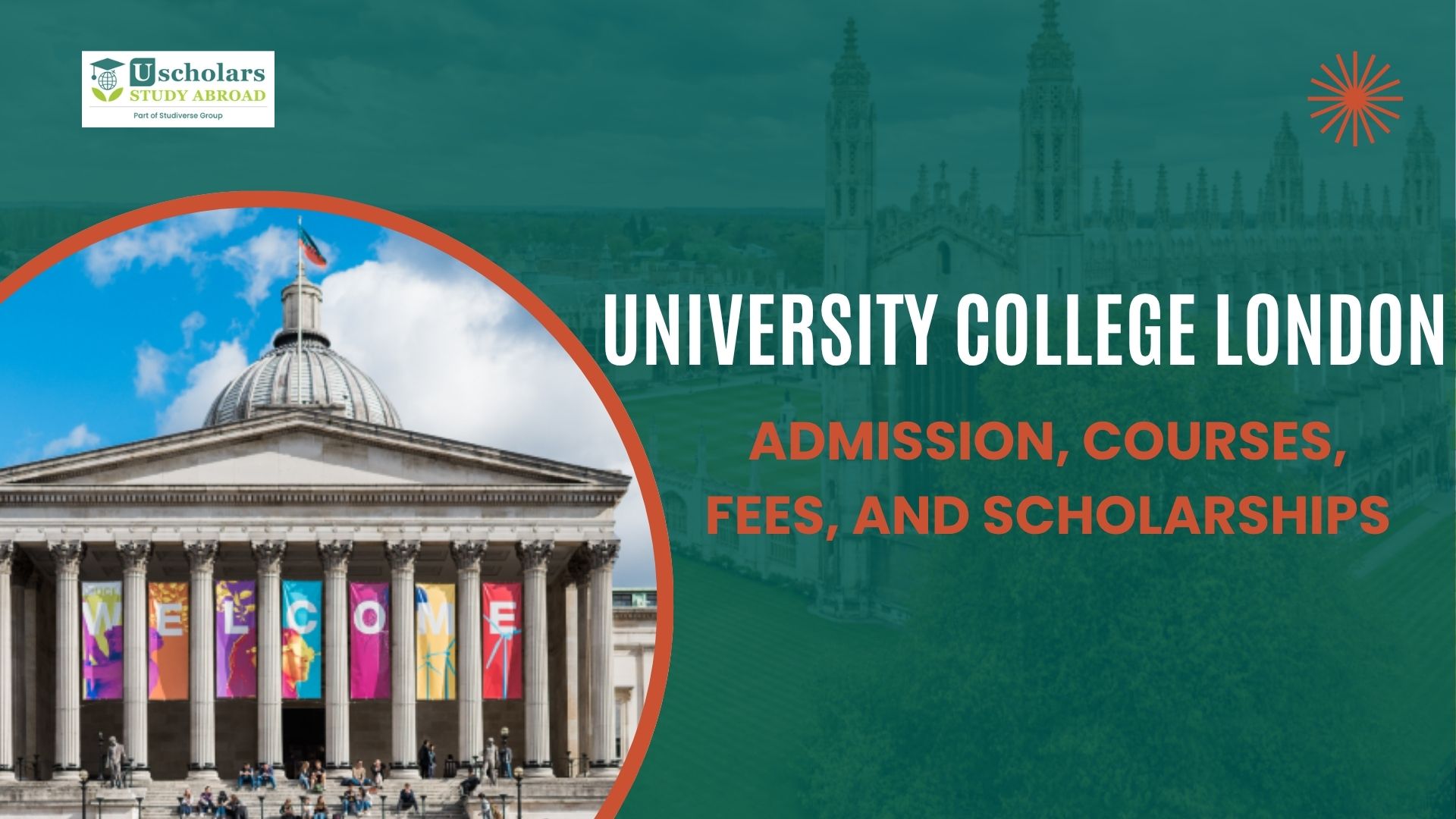
How to Get Into University College London: Admission, Courses, Fees, and Scholarships
University College London, or UCL, is one of the UK’s most prestigious public research universities, located in the heart of London. With its rich heritage dating back to the 19th century and reputation for excellence in teaching, research, and innovation, UCL draws students from around the world. It offers a broad spectrum of disciplines, flexible course structures, and strong support for student life beyond academics. Many students work closely with study abroad consultants to navigate the UCL application process and make the most of the opportunities UCL provides.
A Student’s Guide to UCL History
University College London (UCL) was founded in 1826 as London's first university, with Jeremy Bentham playing a key role. It was intended to provide education to those who had been barred from pursuing higher education due to strict or orientational restrictions.
UCL became a trailblazer in modern education, admitting students without paying attention to race, religion, or political beliefs. Moreover, UCL is consistently ranked among the world's top colleges, renowned for its exploration of greatness and commitment to civil rights.
Programmes, Duration and Eligibility
Below is a cleaner snapshot of how UCL’s academic offerings and eligibility criteria might look. (Note: verify the numbers on the official UCL site for the exact year you refer to)
|
Level / Programme |
Number of Courses (approx.) |
Duration |
Typical Eligibility / English Test Requirements |
|
Master’s (MS, MA, MSc) |
~200+ |
1–2 years |
IELTS 6.5–8.0, PTE / Duolingo or equivalent |
|
MBA / PGDM |
~40–50 |
1 year (full-time) |
Higher IELTS / GRE scores |
|
Undergraduate (BSc, BA, BEng, etc.) |
Many across faculties |
3–4 years |
IELTS 6.5–7.5 (depending on course) |
|
Architecture / Fine Arts / Specialised Degrees |
Select courses |
3–6 years |
Higher language test scores/portfolio review |
|
Research / PhD |
— |
3–4 years (full-time) |
Strong academic record, departmental requirements |
- To illustrate, UCL’s annual undergraduate tuition for UK students is fixed at £9,250 for 2024‑25.
- For international students, UCL fees differ by course and faculty. Some programmes here charge over £21,960 for international students.
Popular Courses Offered at UCL
- Undergraduate: BSc in Computer Science; BA in Economics; Engineering disciplines
- Postgraduate: MSc in Data Science and Machine Learning; LLM (Law); MA in various arts and humanities
- Doctoral Research: PhD in Biomedical Sciences; PhD in Economics etc., with departmental supervision
(Note: Ensure you get the latest course names, UCL fee structures, and available streams from UCL’s official website.)
UCL Admission Requirements and Application Process
Admission norms vary by UCL programme and the level you apply for. Typically, University College London requires strong prior academic credentials, standardised test scores (if needed), letters of recommendation, a personal statement, and sometimes additional exams or portfolios.
Applications are made via UCL’s application portal or via UCAS (for many undergraduate programmes). The steps often include:
- Selecting your desired programme and entry year
- Checking academic, test, and language requirements
- Gathering supporting materials (transcripts, statements, references)
- Submitting your application before the deadlines
- Applying for scholarships or financial aid, where available
Always check the relevant department’s page for precise details and deadlines. Our education consultants provide complete admission guidance so that you don’t feel overwhelmed by the application process.
Fee Structures
The fee structures for UCL courses change depending on aspects like residency status, level of study, and programme of study. Students need to browse UCL’s official website or contact the admissions office for extensive information on fee structures.
UCL Scholarships and Funding Opportunities
UCL offers multiple funding schemes, scholarships, and bursaries, some university-wide, others department-specific.
- GREAT Scholarships: UCL offers these to international students, including those from India (£10,000).
- UCL India Excellence Scholarships: Provides support for Indian students pursuing master’s degrees (~£5,000).
- Research and Doctoral Funding: UCL’s Research Excellence Scholarships (RES) cover tuition and provide support for PhD students.
- Departmental awards: e.g., the Jean Orr Scholarship offers £7,000 for master’s students in History, French, Italian, or Dutch.
- UCL Global Masters Scholarship: A need-based scholarship offering up to £15,000 for international master’s students from lower-income backgrounds.
- UCL Global Undergraduate Scholarship: Provides need-based financial support to international undergraduate students, helping cover UCL fees.
- Chevening/UCL Scholarships: Prestigious merit-based awards covering full tuition, travel, and living expenses for eligible master’s students in partnership with the UK government.
- UCL Institute of Archaeology International Master's Student Award: A merit-based award offering up to £2,500 for outstanding international archaeology master’s students.
To find relevant options, use UCL’s Scholarships and Funding portal, and check department pages for discipline-specific awards.
London Accommodation and Student Life
UCL provides a range of housing options including university-managed halls, shared flats, and student accommodation in London, UK. Many off-campus choices, including top-tier dorms in London are located close to UCL’s Bloomsbury, Camden, or East London campuses. London’s transport network, vibrant student culture, museums, research institutions, and proximity to industry make life at UCL rich and full of opportunity.
Placements and Alumni Network
UCL has a strong reputation among top global employers. Graduates have landed roles at corporations such as Google, Goldman Sachs, Microsoft, McKinsey, and more. The institution places high importance on employability, career coaching, internships, and real-world engagement.
Why Choose UCL?
- Global Recognition: UCL consistently ranks among the top universities worldwide
- Breadth of Opportunity: Interdisciplinary programmes and research across many fields
- Diverse and Inclusive Culture: Students from all over the world, a vibrant academic community
- Strong Support Infrastructure: Scholarships, housing, career services, research facilities
If your global study goals include London and world-class research, UCL could be your ideal destination.
Make UCL Your Next Step: With the Right Support
Exploring UCL is exciting, but turning that dream into an actual offer letter? That takes more than just good grades. With competitive admissions, a massive course catalogue, and a global reputation, UCL draws some of the brightest minds from around the world. To stand out, you’ll need more than ambition; you’ll need a game plan.
From writing a standout personal statement and meeting IELTS requirements to choosing the right course and sorting out finances, there’s a lot to juggle. And let’s not forget scholarships, accommodation, and visa paperwork, it’s easy to feel overwhelmed.
This is where Uscholars becomes your go-to guide. As trusted study abroad consultants, we’re here to guide you through every step, whether it’s shortlisting courses, prepping for IELTS, or figuring out how to fund your studies. We simplify the process so you can focus on what matters most: getting into UCL and thriving once you’re there.