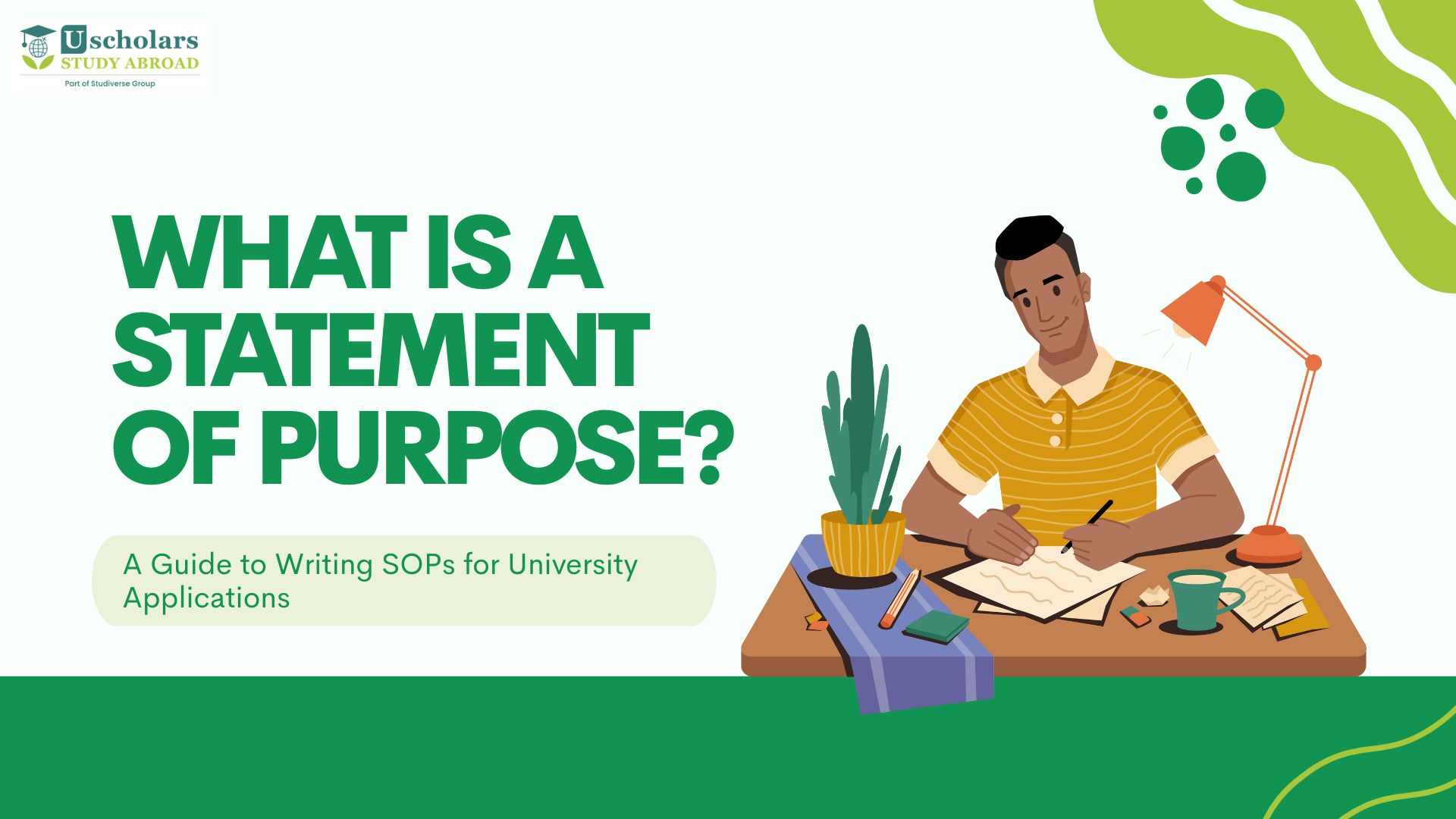
What’s an SOP, really?
Okay, if you're applying abroad or to any competitive programme, you've definitely heard the term "Statement of Purpose" thrown around. But what is it actually?
Every year, admissions committees read thousands of applications. Your grades tell them you're capable. Your resume shows you're accomplished. But your Statement of Purpose? That's where you come alive on paper. It's your personal pitch, your academic autobiography, and your vision statement all rolled into one powerful document.
Think of it as your story on paper. It conveys who you are, what you want to study, and why you picked that university (not just any university). And how all of it connects to where you're headed in life.
Here's what it's NOT: it's not just a list of your grades or achievements. Your transcript already does that job. Your SOP is where you show the admissions committee your passion, your clarity of purpose, and honestly? What makes you different from the 5,000 other applicants with similar GPAs.
A strong SOP can unlock top universities, scholarships, and dream programmes, while a weak one risks getting lost in the pile. That’s why many students seek guidance from study abroad consultants to refine their ideas and highlight what makes them unique. In this guide, we’ll show you how to craft an SOP that feels authentic, purposeful, and memorable.
SOP vs. Personal Statement vs. Motivation Letter
Wait, are these all the same thing? Not quite. Let me break it down:
- SOP (Statement of Purpose): This one's all about academics and goals. You're talking about your academic background, your career plans, and specifically why you want this programme. It's formal and goal-driven.
- Personal Statement: This gets a bit more... well, personal. Think values, challenges you've faced, and how you've grown as a person. Less about grades, more about character.
- Motivation Letter: Common in European applications. It's basically a mix of both, you're explaining your drive and showing why you're a good fit for the programme.
Who Actually Needs An SOP?
Most grad schools as well as scholarship programmes ask for an SOP. Even some competitive internships want one now. If you're planning to study abroad, let's just say it's not optional, it's essential.
What Makes a Great SOP?
Alright, so what are admissions officers actually looking for when they read through hundreds of these things?
- Clear purpose: Why this specific course? Why this university? Don't just say "because it's prestigious." They can smell generic answers from a mile away.
- Academic readiness: Show them you've got the background and skills to handle their programme. But don't just list courses, explain what you learned and how it connects to what you want to do next.
- Future goals: Where are you headed? What do you want to achieve? Career ambitions? Research dreams? Paint them a picture of your future.
- Personal voice: This is huge. Your motivation, your uniqueness, what makes you special. This isn't a cover letter where you sound like everyone else. Be human.
Understanding SOP Requirements
Before you even start typing, you need to know what the university expects. I can't stress this enough, requirements vary. But most follow a similar pattern, so let's break it down.
Length Matters (But Not as Much as You Think)
Here's the general guideline:
- Undergraduate SOPs: Usually 500-700 words
- SOP writing for MBA/MS: Around 800-1,000 words
- Best statement of purpose for PhD: Slightly longer because you need space to discuss research
But here's the truth, quality beats quantity every single time. A tight, well-written 600-word SOP will always beat a rambling 1,200-word mess. Keep it clear. Keep it meaningful.
Latest SOP Format
Most successful SOPs follow this basic structure:
- Introduction: Hook them with your academic goals or a compelling moment
- Background: Your education and key achievements (the relevant ones)
- Experience: Internships, projects, anything hands-on
- Why this programme/university: Be specific here
- Future goals: Career plans or research ambitions
- Conclusion: End with confidence
Getting the Tone Right
This trips up so many students. You want to be authentic and professional at the same time. It's not a casual text to your friend, but it's also not a legal document.
Write in first person. Skip the clichés (seriously, no one wants to read "Ever since I was a child..." for the thousandth time). Show genuine motivation. Let your personality come through.
Country and Programme Variations
Different places, different expectations:
- US Universities: They want personal + goal-driven. Tell your story, connect it to your ambitions.
- UK Institutions: More academic, more concise. Get to the point faster.
- Canada: Nice blend of academic and personal. Show both sides.
- Australia: Career-focused. What are you going to do with this degree?
- Europe: Often research-oriented. They might even call it a motivation letter.
And programme type matters too:
- MBA: Leadership stories + career fit
- MS: Technical skills + research interests
- PhD: Deep dive into research + methodology
- Undergraduate: Personal journey + where you're headed
Bottom line? Understanding the right format and tailoring it to your programme and country shows you've done your homework.
What to Include in Your SOP: Essential Components
So you know the format. Now comes the big question every student asks: "What do I actually write in each section?"
This is where a lot of SOPs either shine or fall flat. Let me walk you through the key components and what admissions committees are really looking for in each one.
1. Academic Background
Your academic journey is the foundation. This section tells the committee you've got the skills, the curiosity, and the dedication to thrive in their programme.
2. Professional Experience
Now connect your classroom knowledge to the real world. Even if you're fresh out of undergrad, practical experiences matter - internships, part-time jobs, volunteer work, student projects.
Whether your background is technical, creative, or business-focused, this section should show progress, growth, and curiosity. Your SOP should complement your CV, not repeat the same information. Check out our student CV guide to ensure you highlight the right details and save the elaborations for your SOP.
3. Why This Programme?
Here's where many applicants completely drop the ball. And it's honestly one of the most critical sections.
Admissions committees can tell when you've copy-pasted the same "why this university" paragraph across 10 different applications. They want to see that you've done your homework and are genuinely interested in their programme specifically.
4. Career Goals
Your career goals section ties everything together - past, present, and future. It helps the committee see your long-term vision and understand exactly how their programme fits into your plans.
5. Personal Motivations
Finally, bring your SOP full circle with something personal. This section answers the "why" behind your entire journey.
Sample SOP Structure and Example Breakdown
Sometimes the best way to understand how to write an effective SOP is to actually see one in action. So let's break down what a strong SOP looks like, paragraph by paragraph.
Paragraph-by-Paragraph SOP Structure
1. Introduction: The Hook
Start with something that grabs attention. Maybe it's a personal story, a defining moment, or an insight that shaped your interest. Keep the content short about 3-4 sentences max. Make it engaging and relevant. Get them to want to read more.
2. Academic Background
Here’s where you ease into your educational journey. What courses mattered? What achievements were significant? What experiences shaped your interests? Focus on quality over quantity. Pick 2-3 meaningful experiences rather than listing everything. Show you have the academic foundation for their programme.
3. Professional Experience and Projects
Discuss internships, jobs, research projects, and anything that relates to your field. Talk about problems you solved, teams you worked with, and skills you developed. Demonstrate you're not just book-smart. You've got practical experience too.
4. Why This Programme / University
Get specific here. Name-drop those professors, mention those courses, and talk about the research labs or opportunities that attracted you. Show genuine alignment between what you want and what they offer. Prove you've done your homework and you're actually a great fit.
5. Career Goals
Paint a picture of your future. Where do you see yourself in 5 years, and how does their programme help you get there? Present a clear, forward-looking vision.
6. Conclusion: The Personal Touch
End on a reflective note. What motivates you? What impact do you hope to make? Be confident but stay humble. Leave them with a lasting impression of your purpose and passion.
Mini SOP Example (Annotated)
Here's a short paragraph that demonstrates these techniques:
"Growing up in Mumbai, I watched my father struggle to manage his small business using manual records. When I helped him digitise our accounts using a simple spreadsheet, I realised how technology could transform efficiency. This experience inspired me to pursue Computer Science, with the goal of building tools that empower small businesses in developing economies."
Why this works:
- Personal hook: It starts with a real, relatable story. Not generic. Not trying too hard.
- Clear motivation: Connects a personal experience directly to academic interest
- Defined goal: Shows direction. Shows purpose. Shows long-term thinking.
- Emotional connection: There's a human element here that resonates
This short example demonstrates how you can make your SOP authentic, purposeful, and memorable, all in just a few sentences.
If you’d like to generate a personalised draft instantly, you can also try our SOP Writer. It uses advanced AI to craft a tailored SOP based on your profile, academic goals, and target universities. It’s a great way to get a strong starting point before you fine-tune your story manually.
Your SOP: A Window into Your Aspirations
At the end of the day, your Statement of Purpose isn’t just an essay, it’s your story, your journey, and your vision for the future. Templates and formats can guide you, but what truly makes your SOP stand out is you, your authenticity, clarity, and passion.
Admission committees aren’t looking for perfection; they’re looking for purpose. Your SOP is your chance to show not just what you want to study, but why it matters and how you’ll make an impact.
Be honest. Be clear. Be yourself. Start drafting today, and remember, great SOPs are built through reflection, revision, and feedback.
Need a little extra support? Connect with Uscholars, a trusted study abroad consultancy. Our mentors will help refine your SOP and guide you through applications, scholarships, and visas, so your story reaches the right university.
Ready to take the next step? Visit Uscholars and turn your study abroad dream into reality.