A Beginner's Guide to Studying Abroad: Steps for Students to Follow
If you’re thinking, “I want to study abroad, but I have no idea where to begin,” you’re not alone. Every year, thousands of students dream of studying at a foreign university. Many students dream of pursuing their bachelor’s or master’s degree abroad. But once the excitement settles, reality kicks in, especially if you’re worried about money, exams, or visas.
Students get tons of questions. Which country should I choose? Can I afford it? What exams do I need? How do visas even work? Which are the best study abroad programmes? Suddenly, the dream can feel confusing, stressful, and even out of reach.
Here’s the good news: it doesn’t have to be that way. With the right guidance and a clear plan, studying abroad becomes far more manageable. That’s exactly how our experienced study abroad consultants work, by breaking the entire journey into simple, practical steps and guiding you at every stage.
Step 1: Understand Why You Want to Study Abroad
Before looking at study abroad programmes or the best countries to study abroad, ask yourself why you want this. Is it for better career opportunities? Global exposure? Access to top study abroad universities? Or a chance to explore life outside your home country?
Your reason matters because it helps determine everything that follows: your course, country, budget, and even scholarship options. At Uscholars, this is always the first conversation we have with students during their profile assessment, because clarity at the beginning saves months of confusion later.
Understanding your reason helps you choose the right overseas study programme, country, and university, especially if you’re planning postgraduate degrees or a master’s abroad.
Step 2: Choose Your Course (Before You Choose the Country)
This is where most beginners go wrong. Instead of first searching for “best countries to study abroad,” start by choosing your course first. What subject do you want to study? Are you planning to apply for an undergraduate programme, a master’s degree, or other postgraduate degrees? Do you want a research-focused degree or a practical one?
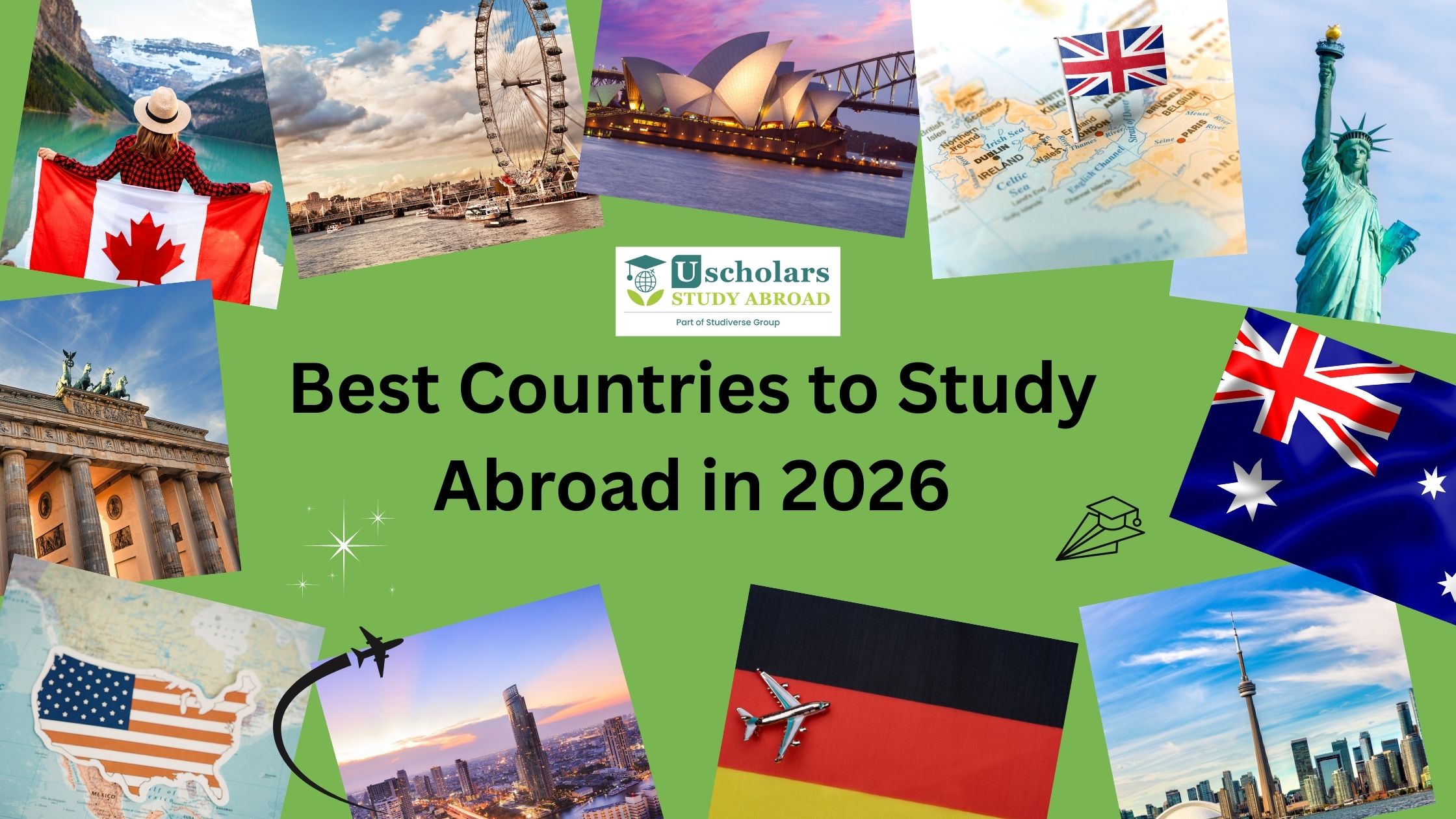
Once your course is clear, choosing between studying in US, UK, Canada, Europe, or Australia becomes much easier. At Uscholars, we always help students align their courses with long-term career goals with our dedicated admission guidance.
Step 3: Shortlist the Best Countries to Study Abroad
Now comes the exciting part: exploring countries for your course. Instead of chasing rankings alone, students should also look for good countries and study abroad programmes that match their academic background, budget, and future plans. This is where expert guidance can help you avoid costly mistakes and focus on the best schools for international students suited to your profile.
Consider:
- Tuition fees and living costs
- Work opportunities
- Visa policies
- Language requirements
- Post-study stay options
Popular choices include:
- Study in USA: Diverse programmes and global exposure
- Study abroad UK: Shorter master’s degrees
- Study in Canada: Work-friendly and PR options
- Study in Europe: Affordable or even tuition-free options
- Study in Australia: Strong education + lifestyle
There’s no one-size-fits-all answer, only what fits you.
Step 4: Research Universities and Programmes
Now it’s time to shortlist abroad programmes and universities. While choosing, students are advised to look at the course curriculum, entry requirements, fees, and scholarships. Industry exposure and location also play a key role in selecting programmes and universities.
Create a mix of:
- Dream universities
- Safe options
- Backup choices
Step 5: Check Eligibility and Entry Requirements
Each study abroad programme has different requirements. They often require:
- Academic scores
- English tests (IELTS, PTE, TOEFL, etc.)
- Exams like GRE or GMAT (if required)
- Work experience (for some master's degree abroad programmes)
Early eligibility checks save time, money, and stress.
Step 6: Prepare for Exams
Most study abroad universities require English proficiency tests. Better scores improve chances of admission, study abroad scholarship application success, and visa approvals. So plan early for:
- IELTS/PTE/TOEFL/ Cambridge/Duolingo
- Retakes if needed
Step 7: Prepare Strong Applications
This step can make or break your admission. Along with exams, you’ll need documents like transcripts, a resume, recommendation letters, and a strong statement of purpose. Your SOP is your story, it explains why this course, why this country, and why this university.
At Uscholars, we work closely with students to write impactful SOPs and build applications that feel authentic, that universities actually want to read. Our AI SOP writer helps students create a tailored personal statement that highlights their academic achievements.
Step 8: Apply to Study Abroad Programmes
Apply online to your shortlisted study abroad programmes. Track deadlines carefully so that you don’t miss any updates, and apply early so that you don’t have to compromise anything later on. Students are also advised to review their documents before submission. Early application often leads to better results, especially for international student scholarships.
Step 9: “I Want to Study Abroad But I Have No Money” - What Now?
This is one of the most common concerns students have, and the good news is, you have options. Many students fund their education through:
- International student scholarships
- University grants
- Government funding
- Study abroad financial aid
- Part-time work options
While study abroad for free isn’t common, studying at a much lower cost is very possible with the right planning. Knowing where and how to apply for a study abroad scholarship can make a huge difference. Uscholars helps students explore scholarships, funding options, and affordable international study centres.
Step 10: Accept an Offer and Apply for a Visa
Once your university offer arrives:
- Compare institutions carefully
- Accept the best fit
- Start your visa process
Step 11: Prepare for Your Study Overseas Journey
Once you receive offers from your shortlisted study abroad universities, you’ll choose the best fit and begin the visa process. After that, it’s all about preparing for life abroad. This includes your flights, accommodation, insurance, finances and settling into a new culture. Whether it’s a full degree or just a semester abroad, preparation helps you start confidently.
Let’s Turn Your Study Abroad Dream into a Plan
Dreaming of studying overseas is a big step, and it’s completely okay if you feel confused, worried about finances, or unsure where to begin. Every successful international student once stood exactly where you are now. What made the difference wasn’t knowing everything from day one, but choosing the right guidance at the right time. You don’t have to navigate this journey alone. With the right support, your study abroad plans can move from “someday” to “this year.”
At Uscholars, we work closely with students to simplify the entire process, guiding you at every stage. From choosing the right course and country to shortlisting universities, preparing strong applications, finding scholarships, and handling visas and pre-departure planning. Your study abroad journey deserves clarity, confidence, and expert support. If you’re ready to take the final real step, or even if you just need honest advice, our counsellors are here to help.